Shopping Cart
In stock, ready to be shipped
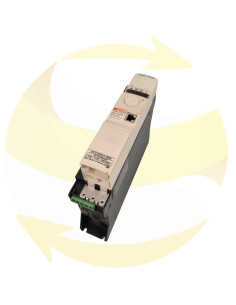
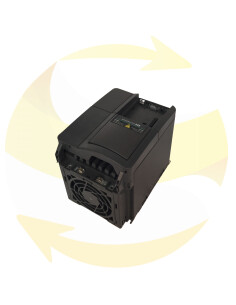
Designed for precise control of asynchronous motors, the SIEMENS MICROMASTER Vector 6SE3213-1CA50 drive delivers stable regulation of speed and torque in industrial environments. 1 AC 208-240 V supply and 3 AC 208-240 V output, with vector control for controlled dynamic response. Recommended for fans, pumps and conveyors where uptime and energy efficiency are priorities.

Reconditioned and tested systems
From 6 to 12
month warranty

New systems
From 12 to 24
month warranty

Reconditioned and tested systems
From 6 to 12
month warranty

New systems
From 12 to 24
month warranty

Sold for parts – no warranty

Repair will be made to damaged and defectiv units
From 3 to 18
month warranty


The SIEMENS MICROMASTER Vector frequency inverter, reference 6SE3213-1CA50, is aimed at maintenance departments, integrators and machine builders seeking robust speed and torque control for three-phase asynchronous motors. From the MICROMASTER Vector family, it serves as a proven solution for modernising existing installations and for quick replacement of end-of-life equipment. The unit is intended for industrial environments where line availability and process quality demand precise control, straightforward commissioning and practical compatibility with common automation practices. With a 1 AC 208-240 V supply and a 3 AC 208-240 V output suitable for low-power asynchronous motors, it covers general applications such as fans, pumps, conveyors and machine auxiliary drives. The range's vector control logic maintains torque at low speed and provides speed stability beneficial for sensitive processes. Depending on series variants, versions with a built-in EMC filter or without filter are available to meet workshop electromagnetic immunity and emission requirements.
The MICROMASTER Vector stands out for reliable control of asynchronous motors in the 208-240 V range. For reference 6SE3213-1CA50, the following characteristics are typically associated with the family and useful for maintenance engineers for functional assessment. The unit is powered by single-phase 1 AC 208-240 V ±10%, then provides a three-phase 3 AC 208-240 V output to the motor, suitable for light industrial applications and auxiliary drives. The range's vector control ensures improved torque retention and regulation dynamics adapted to load variations, while limiting mechanical shocks through configurable acceleration and deceleration ramps available within the family. Filtered and non-filtered executions exist in the series, allowing alignment of the installation with site electromagnetic constraints. Common motor protection functions in the family, such as thermal estimation monitoring and current limiting thresholds, contribute to drive reliability. Implementation, depending on configuration, can rely on a simple user interface and guided parameterisation, supporting rapid integration on new equipment as well as retrofits.
This drive is used where motor speed regulation conditions process quality and operational availability. Common use cases include fans for air handling, pumps for fluid circuits, conveyors in light material handling, and auxiliary mechanisms in packaging, assembly or food processing. In these environments, the ability to precisely control the setpoint, maintain constant torque and ensure smooth starts improves throughput adherence, equipment safety and overall energy efficiency.
The SIEMENS MICROMASTER Vector series benefits from a large installed base, easing replacement and maintenance of existing equipment. The unit integrates smoothly into architectures driven by programmable logic controllers or numerical control, via the interfaces and options offered in the family when required by the application. This technological continuity, combined with clear documentation and the availability of neighbouring family references, is an advantage for multi-site maintenance teams. Compared with a servo-drive dedicated to high-dynamic positioning, a MICROMASTER Vector frequency inverter focuses on robust speed regulation, torque control and operational simplicity, essential parameters for fans, pumps and conveyors.
To secure your restart, Standard Exchange Industry offers reference 6SE3213-1CA50 with several services adapted to industrial contexts: tested reconditioned supply, standard exchange for accelerated restart, or repair of your defective drive when retaining the cabinet and wiring is preferred. Shipping possible within 24 to 72 h depending on availability, with a 6 to 24 months warranty depending on the chosen service. Our technical team supports you to confirm voltage compatibility, the vector control mode within the family and, where applicable, the need for EMC filtering on your site. Confirm your requirement, specify the machine context and we will align the safest solution for your production continuity.

Siemens is an international group of German origin specializing in high technology and present in the sectors of industry, energy and health. It was founded in 1847 by Werner von Siemens.
You might also like